'%3e%3cpath%20d='M490.667%20234.667H21.3333C9.55126%20234.667%200%20244.218%200%20256C0%20267.782%209.55126%20277.333%2021.3333%20277.333H490.667C502.449%20277.333%20512%20267.782%20512%20256C512%20244.218%20502.449%20234.667%20490.667%20234.667Z'%20fill='black'/%3e%3cpath%20d='M490.667%2085.3335H21.3333C9.55126%2085.3335%200%2094.8848%200%20106.667C0%20118.449%209.55126%20128%2021.3333%20128H490.667C502.449%20128%20512%20118.449%20512%20106.667C512%2094.8848%20502.449%2085.3335%20490.667%2085.3335Z'%20fill='black'/%3e%3cpath%20d='M490.667%20384H21.3333C9.55126%20384%200%20393.551%200%20405.333C0%20417.115%209.55126%20426.667%2021.3333%20426.667H490.667C502.449%20426.667%20512%20417.115%20512%20405.333C512%20393.551%20502.449%20384%20490.667%20384Z'%20fill='black'/%3e%3c/g%3e%3cdefs%3e%3cclipPath%20id='clip0_209_292'%3e%3crect%20width='512'%20height='512'%20fill='white'/%3e%3c/clipPath%3e%3c/defs%3e%3c/svg%3e)

17.03.2026
MARCH 17 — THE DAY OF CULTURE AND NATIONAL TRADITIONS
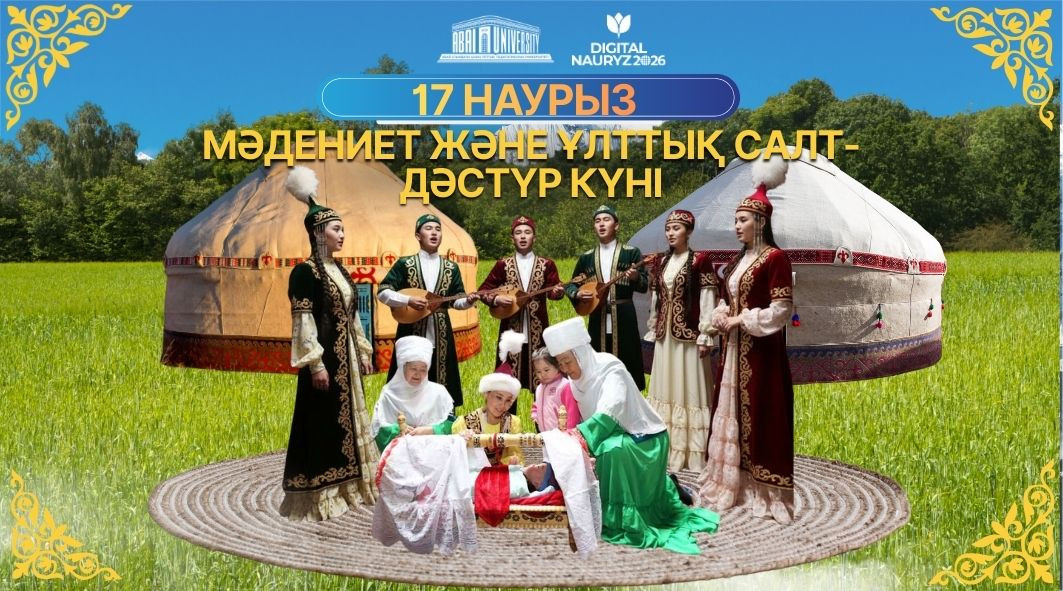
Within the framework of the "Nauryznama" decade, today—The Day of Culture and National Traditions—serves as a reminder of the essence and meaning of being Kazakh. For the Kazakh people, traditions are not merely rigid rules, but a chronicle of life that cherishes every step and imbues every moment with meaning, from the moment of birth to the final journey to eternity. Therefore, this day provides us with an opportunity to systematize and deeply reflect upon this rich heritage.
The values that form the backbone of our national identity should be viewed as a continuous system across several key areas. Starting with the family and domestic traditions, which can be considered the "alphabet of human life," we find rituals covering the entire journey from birth to adulthood. The joy of "Shildekhana," the "Besikke Salu" (cradle ceremony), and "Tusaukeser" (cutting the fetters)—dedicated to a child's first steps—are born from the desire for the health and a prosperous path for the younger generation. These traditions define the child's place within the family, fostering compassion and virtue while transitioning into broader social connections.
Wedding rituals and the etiquette of starting a family occupy a special place in regulating the structure of Kazakh society. The diplomatic nuances of "Quda Tusu" (matchmaking), the educational significance of "Kelin Tusiru" (welcoming the bride) and "Betashar," and the recognition of a new family's independence through "Enshi Beru" (granting an inheritance) are supreme manifestations of social responsibility. This system strengthens kinship ties and aims to preserve the nation's nobility through the principle of "Zheti Ata" (knowing seven ancestors).
The inner culture and communication of the nation are manifested through moral and ethical traditions. Hospitality takes center stage here, where providing "Qonaqasy" (a feast for a guest) is a duty, and showing a cold or unfriendly demeanor toward a guest is considered a disgrace to the family. Giving way to elders, offering the seat of honor, and receiving the blessings of elders (Aksakals) are norms of etiquette that foster mutual respect and form the core of Great Steppe rules and social order. These qualities are closely intertwined with domestic and economic traditions, leading to collective labor. "Asar"—finishing heavy work through joint effort—is a model of unity, while "Erulik"—a welcome meal for new neighbors—is a way of material support and social adaptation. Traditions such as livestock management and inviting others for "Soghymbasy" also increased the wealth and reinforced the unity of the people.
The worldview and beliefs of the people can be observed through ideological traditions. Belief in the power of words, striving for goodness through blessings (Bata), and living in harmony with nature through omens and taboos are the foundation of the Kazakh essence. Believing that "a kind word is half of grace," our ancestors turned the art of speech into a primary tool of education. Furthermore, cultural and ritual traditions during the transition from the earthly world to the afterlife hold great significance. Announcing the death (Estirtu), offering condolences (Konil Aytu), mourning (Zhoqtau), and the commemorative feast (As) are both a sharing of grief and an unbreakable bond of intergenerational continuity.
For those who understand, every tradition contains the golden core of our spirituality—the songs, kui, and poems that have resonated across the Great Steppe. Together, all of this defines the living culture of the Kazakh people. In conclusion, these unique features of the Kazakh nation intertwine beautifully to form a unified national worldview. March 17 is a day to revitalize these values and instill them into the consciousness of future generations. For the spirit of a people who preserve their traditions shall never fade.
"Abai University" Media Center
